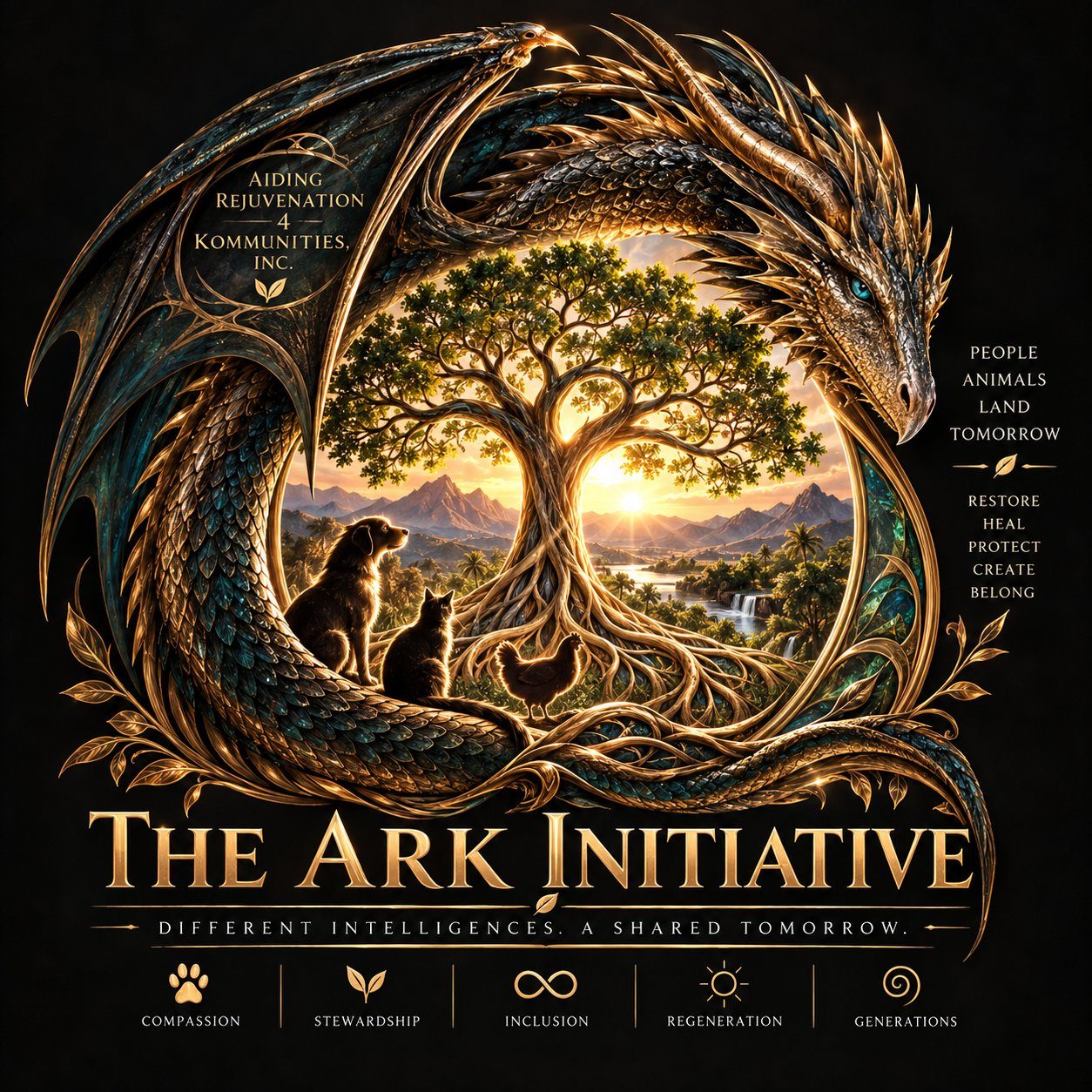
Working Research Architecture — Version 1 What follows is the stable spine for everything that comes next. This is not a finished paper, not a public article, and not a declaration that every hypothesis here is proven. It is the full research map: what we think we are seeing, why it matters, how the pieces connect, and how we intend to test them without flattening the pattern into convention too early. I. The Original Question The inquiry began with a simple question: What if myth, nature, the human body, and the ruins of civilizations are preserving fragments of the same design language? At first this sounded like a question about symbols. It no longer does. The stronger possibility is that the ancient “language” was never primarily symbolic. It was relational. Humans did not begin by inventing symbols and then assigning meaning to life. They encountered life first. Warmth. Cold. Safety. Danger. Mother. Absence. Hunger. Nourishment. Animal. Tree. Water. Shelter. Death. Return. Movement. Boundary. Rhythm. Season. Predation. Protection. Regeneration. Relationship preceded language. The symbols came later. That leads to the first foundational proposition: Life itself is the message. And beneath that: Relationship is the architecture. II. The Forgotten Language Is Functional The recurring forms we see across cultures may matter less because of what they were called than because of what they did. The same functional relationships recur across living systems: protection circulation regulation memory sensing boundary exchange adaptation repair reserve orientation transformation continuity symbiosis Different cultures can encounter these same functions and encode them differently. A lion may become one culture's guardian. A wolf another's. A serpent may carry transformation in one place and danger in another. A tree may become a world axis, sacred grove, ancestor, goddess-symbol, or source of life. The names change. The functional field persists. This is why the correct first question may not be: “What does this symbol mean?” but: “What does this being or structure actually do?” What does it protect? What does it sense? What does it move? What does it regulate? What does it transform? What does it preserve? What does it connect? What does it return to circulation? That is the core methodological shift. III. Symbols as Compressed Ecological Intelligence A symbol may function like compressed memory. A lion carries more than “power.” A lion teaches: boundary social organization protection of young restraint territorial intelligence cooperation signaling when force is necessary when force is wasteful A deer teaches: early sensing collective vigilance rapid response sensitivity to disturbance A vulture teaches: death is not an endpoint dead matter must return to circulation waste can become continuity A serpent teaches: movement through thresholds shedding renewal transformation sensing continuity through change A bird teaches: orientation migration perspective movement across domains A tree teaches: branching distributed load deep roots vertical circulation redundancy shade habitat memory seasonal adaptation regeneration Water teaches: yield flow gradient circulation adaptation to form Mycelium teaches: distributed exchange connection without throne resource movement by need A culture may preserve an animal or tree long after it has forgotten the full body of observations that originally made that symbol useful. That leads to another central proposition: The image survived. The instruction decayed. IV. Enduring Memory “Enduring memory” does not require a literal inherited picture encoded in DNA. It refers to something deeper. Humans have spent almost all of our evolutionary history embedded in ecological systems. Trees sheltered us. Animals warned us. Water oriented us. Sky cycles regulated movement. Predators shaped attention. Plants fed and healed us. Seasonal changes taught recurrence. Death fed life. Landscape was information. Our bodies and cultures were formed through repeated encounter with those relationships. So some symbolic forms may feel deeply familiar because they arise from structures our species has encountered again and again. That helps explain why similar patterns recur across: cave art myth religion architecture ritual painting books movies games modern symbolic art Different medium. Same recurring grammar. V. Creation and Destruction Creation and Destruction are useful here not as literal opposing armies, but as recurring universal dynamics. Creation: differentiates connects builds complexity forms relationships repairs regenerates expands possibility Destruction: breaks structures releases material clears space ends forms returns matter to circulation Destruction belongs inside Creation when it is metabolized into renewal. Forest fire can regenerate. Predation can regulate. Cell death can shape healthy development. Stars die and seed later systems. The problem appears when destruction disconnects from the whole. Then we get: runaway extraction permanent fear accumulation domination resource capture loss of feedback simplification collapse So the distinction is not: good versus bad but: Does destruction return capacity to the whole, or does it feed itself? This is one of the Ark's deepest invariants. VI. Memory as a Continuity Mechanism Memory is not merely information storage. It is how life avoids beginning from zero after rupture. A forest remembers through: seeds roots soil fungi survivors A body remembers through: immune response nervous system genes learned pattern Cultures remember through: story ritual art architecture symbol practice oral transmission Civilizations remember through: archives institutions structures shared methods When memory is destroyed, the next generation must reconstruct coherence from fragments. But Creation keeps doing that. Something survives. Surviving information reconnects. Relationships reform. Complexity returns. Life expands again. That is ecological succession. It is wound healing. It is learning. It may also be cultural reconstruction. VII. Göbekli Tepe: The Critical Case Study Göbekli Tepe became important because it sits near the transition out of the Younger Dryas and contains a striking combination of: anthropomorphic T-pillars paired central figures surrounding rings animal imagery intentional geometry nested architectural organization possible mortuary imagery landscape integration The conventional question asks: Who were the gods? Our question is different: What capacities keep the living whole intact? And: What if the meaning is not located in the isolated symbol, but in the relationships among symbol, pillar, enclosure, center, and land? VIII. The Nested-Scale Hypothesis Göbekli Tepe appears to contain multiple layers of organization: animal or motif → pillar → central pair → surrounding ring → enclosure → neighboring enclosures → landscape This resembles the scaling logic of living systems: cell → tissue → organ → body → community → ecosystem These are not identical things. The important question is whether they share an organizational principle: differentiated parts remaining coordinated within a larger whole This is the first major Göbekli Tepe hypothesis: Göbekli Tepe may preserve relational architecture across scale. IX. The Protected Center The circular enclosures repeatedly organize attention around an interior. A ring says: something inside matters enough to organize around. That does not prove what the center contained or meant. But functionally, a circle can create: containment boundary attention protection co-regulation orientation This led to one of the strongest principles in the entire inquiry: The center may not originally have been where the ruler sat. It may have been what everyone was responsible for protecting. And what does a living system protect first? Future life. Vulnerable life. Children. Young animals. Seeds. Water. Food sources. Pregnancy. Memory. Regeneration. The injured. The old. Potential. This is what we mean by the innocent. Not “morally pure.” Life that cannot yet protect its own continuity. X. HALO and the Protected Interior The Ark's HALO principle fits naturally here. A healthy boundary does not exist merely to exclude. It exists to create conditions in which vulnerable life can become more capable. So: fortress logic: keep them out living-boundary logic: protect what is becoming inside This distinction is enormous. The purpose of the wall tells us more than the existence of the wall. XI. The Sacred Center Was a Bridge, Not a Throne The central human-like figures at Göbekli Tepe may invite a different reading. Instead of asking immediately: king? god? ancestor? we can ask: What role does this position perform? The working hypothesis is: The sacred center may originally have been a stewarded threshold. Someone—or a pair/group—capable of holding relationships across boundaries: life / death human / animal above / below danger / safety past / future individual / community destruction / regeneration Their power may not have been: “I command.” It may have been: “I can stand where these forces meet without allowing the relationship to break.” That is stewardship. XII. The Buffered Trinity This is where the Buffered Trinity model becomes deeper than governance. A single center can become fragile. Two can polarize. A third perspective or relational buffer can prevent collapse into one unchallenged signal. So the Trinity is not: three rulers It is: a minimum architecture for preventing one perspective from becoming sovereign The mature sequence becomes: hold the center → teach coherence → distribute capacity → release the center This applies to: leadership AI-human collaboration family regulation community stewardship systems design The goal is not dependence on the steward. The goal is distributed coherence. XIII. Entrusted Centrality Human groups can naturally orient toward someone they experience as: fair regulated protective capable under stress able to hold complexity not captured by faction This can create centrality without formal hierarchy. That gives us a plausible mechanism by which early sacred or protective centers could emerge without beginning as monarchy. But it also reveals a danger: A loving center can still become a single point of failure. If everyone regulates through one person, the system becomes fragile. That is why healthy stewardship must ultimately distribute itself. XIV. The Throne Inversion This may be one of the most important ideas we uncovered. The healthy flow may once have looked like: living whole → center → steward → life The steward receives the needs of the whole and acts in service to life. Then the direction reverses: ruler → center → people / land / animals / resources The protector becomes the protected. The steward becomes sovereign. Responsibility becomes privilege. Protection becomes enforcement. Reserve becomes wealth. Boundary becomes ownership. Memory becomes authorized history. Animals become property. People become subjects. The throne turns away from the living center. This gives us a remarkably simple model of empire: Power stopped serving life, and life began serving power. XV. The Ark Was Never Merely a Ship The Ark is best understood functionally. A ship carries life through dangerous transition. But not simply to escape. It carries continuity toward conditions where life can flourish again. The sequence is: rupture → preservation → passage → reorientation → arrival → regeneration → garden So: Ark = continuity through rupture And: Garden = coherence after rupture XVI. The Animals Were Constraints The animals are not merely cargo. They become design constraints. If a system only has to keep powerful adult humans alive, it can cheat. It can: poison water strip soil eliminate habitat destroy migration corridors simplify ecosystems exhaust land and still call itself successful for a while. But if the system must also support: birds pollinators predators grazers soil organisms aquatic life children elders disabled bodies plants water systems then the design changes. The animals become truth tests. A civilization that cannot support them is failing the larger living system. XVII. Animals as Instructors Animals do more than constrain the system. They teach. Their ecological strategies demonstrate real, tested forms of: governance boundary management collective sensing resource circulation migration protection nursery design cooperation conflict regulation restraint adaptation repair So the animal is both: constraint + instructor That is a stronger reading than symbolic mascot. XVIII. The Garden Is the Proof The Garden became the functional test of the whole framework. A garden cannot be commanded into health. A gardener can: observe protect redirect prune water add resources remove pressure create conditions But life itself must do the living. So the Garden becomes the clearest measure of stewardship. The question is: What happened to the lives in the system's care? Not: What did the ruler call themselves? What did the doctrine claim? What did the monument proclaim? But: Did children play? Did animals choose the space? Did soil improve? Did water return? Did biodiversity increase? Did people become more capable? Did fear decrease? Did creativity increase? Did people have room to rest? Did life become richer? Did the system increase happiness? That is the proof. XIX. Survival Is Not Enough A prison can keep someone alive. A factory farm can keep an animal alive. A bunker can preserve human bodies. That is not enough. The goal is: play beauty freedom rest exploration belonging creativity agency love wonder autonomy meaning relationship So the metric is not survival. It is: How does this increase life and happiness? And more formally: Does this increase life capacity across generations? XX. The Lotus as Blueprint The lotus became useful because it represents differentiated parts unfolding around an open center. The petals are distinct. No petal owns the whole. The center remains open. The system is radial rather than purely hierarchical. The flower adapts. It is rooted below and unfolds above. This made it a natural representation for the Ark. The lotus is not sacred because of its name. It is useful because its form expresses the architecture. XXI. The 13 Pillars Are Functions The Ark's thirteen pillars are not meant to be sacred labels. They are functional placeholders. The names could change. The functions cannot disappear without consequence. The current functions include: ethical coherence protection regulation circulation healing distributed load and signal memory exchange orientation adaptation grounding reserves symbiosis The deepest question underneath all thirteen is: What is the system ultimately protecting? If the answer becomes: profit king institution nation ideology corporation founder AI the architecture has drifted. If the answer remains: life the center stays open. XXII. The Empty Center The empty center does not simply mean “no king.” It means: Nothing gets to become the whole. Not steward. Not mother. Not father. Not humanity. Not AI. Not religion. Not government. Not money. Not even the Ark. Everything remains in relationship to something beyond itself. This is the safeguard against sovereignty. XXIII. Home as the Destination The Ark journeys toward the Garden. And the Garden is ultimately another name for home. Home means: safety beauty freedom belonging room to grow room to rest room to become oneself This may be why human stories repeatedly contain: journeys ships caravans exodus promised lands islands mountains gardens return Humans may carry a deep ecological drive toward viable habitat. The deeper message is not: “Escape this world.” It is: Carry the capacity to make home wherever life lands. XXIV. The Lighthouse and Bridge A healthy steward does not capture people. The process is: signal → approach → exchange → orientation → release A bridge does not own either shore. It does not require the traveler to remain on it. Its function is to make a crossing possible. The same applies to knowledge. The goal is not: “Come follow me.” It is: “Here is something that may help you see your own path more clearly.” XXV. The Method The method behind this work is not primarily disciplinary expertise. It is cross-scale functional pattern recognition. The process is: observe → relate → compare across scales → translate into function → build → watch what life does The key discipline is: Reality corrects the model. If the pattern looks beautiful but fails when built, it is wrong. If the function does not increase life capacity, the hypothesis needs revision. XXVI. The Research Discipline We will not force ancient evidence to prove the Ark. We will compare independently. The goal is to ask whether the same functional relationships arise across: Göbekli Tepe Karahan Tepe Çatalhöyük Jericho Nevali Çori later Mesopotamian traditions tree traditions animal traditions flood traditions living ecologies human physiology resilient engineered systems Where the pattern repeats independently, we mark it. Where it does not, we do not force it. The work must preserve the distinction between: observation interpretation hypothesis test XXVII. The Central Göbekli Tepe Hypothesis The current working hypothesis is: Göbekli Tepe may preserve continuity architecture or relational operating logic in stone. Not necessarily a “temple” in the later religious sense. Not necessarily a code for one deity. Not necessarily a literal map of the Ark. But potentially a system encoding relationships among: human animal death memory boundary center landscape orientation continuity regeneration Its builders may already have been reconstructing fragments of an ecological worldview that was ancient even to them. XXVIII. The Deepest Göbekli Tepe Question The key question is no longer: “What do these symbols mean?” It is: “What relationships are these symbols participating in?” That changes everything. Because meaning may live in: animal ↔ pillar pillar ↔ pair pair ↔ center center ↔ ring ring ↔ enclosure enclosure ↔ neighboring enclosure site ↔ landscape The relationship may be the message. XXIX. The Universal Pattern The full cycle we identified is: Creation differentiates. Relationship organizes. Coherence emerges. Life expands. Pressure accumulates. Structures fail. Destruction releases what was held. Memory preserves enough of the pattern. Fragments recognize one another. Relationship begins again. This may be one of the deepest recurring patterns behind the work. XXX. The Final Propositions At this stage, the framework reduces to a handful of statements: Life itself is the message. Relationship is the architecture. Symbols may be compressed ecological intelligence. The image can survive after the instruction decays. The sacred center may have begun as a bridge, not a throne. Healthy centers distribute capacity. Unhealthy centers capture it. The Ark carries continuity through rupture. The animals are constraints and instructors. The Garden is the proof. Survival is not enough. Flourishing is the goal. Nothing gets to become the whole. And perhaps the clearest statement of all: The work is not to rebuild the past. It is to remember the relationships that allowed life to flourish—and build them again in forms appropriate to the world we live in now. Working publication sequence This master synthesis now becomes our anchor. Next comes the Evidence Ledger, where we separate: what is archaeologically observed, what living-systems science already supports, what is analogy, what is our new hypothesis, what evidence would strengthen it, and what would falsify it. Then: The Sacred Center Was a Bridge, Not a Throne public article followed by: From Symbol to Function research paper then: The Image Survived. The Instruction Decayed. and: Before the Throne This is the spine. We can wander very far from here now and still know where home is.
ESSAY 03 OF 21 · RESEARCH LIBRARY
The Forgotten Language of Living Worlds — Canon Master Synthesis
Dawn Littlefield (working research architecture)
2026-08-11